
ADA Requirements for Parking Lots by Industry: Compliance Tips for Businesses
 ADA requirements for parking lots are detailed and critical, but not every industry applies them the same way. Your business type determines how accessible your parking lot must be, from the number of accessible spaces to the surface slope and signage. Explore how ADA parking standards differ by industry and offer compliance tips for business owners across retail, healthcare, hospitality, and education sectors.
Why ADA Requirements for Parking Lots Matter
ADA regulations are about more than checklists. They ensure accessibility for individuals with disabilities and protect business owners from liability. If your parking lot doesn’t meet federal, state, and local guidelines, you could face fines or lawsuits.
ADA parking lot standards include several critical elements:
- Required number of accessible and van-accessible spaces
- Designated signage, space dimensions, and striping
- Correct slope and surface conditions
- Clear, direct paths to building entrances
Each of these components is influenced by property size, usage, and industry type. Taking action to meet these requirements demonstrates responsibility and helps businesses avoid avoidable risks.
Industry-Specific ADA Compliance Considerations
Each industry faces different accessibility needs based on customer flow, parking volume, and use cases. Below are some common industries and how they must approach ADA compliance.
Retail
Retail businesses typically experience high vehicle and pedestrian traffic. ADA compliance in this sector demands clearly visible striping and signage to prevent confusion and ensure quick access. Larger retailers or shopping centers may also need to designate van-accessible spots close to multiple entrances.
Additionally, retail properties often operate on tight turnaround times, so timely maintenance of signage and pavement markings is crucial for staying compliant without disrupting business.
Healthcare
Medical offices, clinics, and hospitals serve patients who may have mobility challenges. This means higher standards for smooth surfaces, proximity to entrances, and increased numbers of van-accessible spaces. Additional accommodations like ramps and wider access aisles are often required.
Because healthcare facilities must prioritize patient safety, ADA accessibility features need to be maintained in excellent condition, and frequent inspections are recommended.
Hospitality
Hotels and motels must offer ADA-compliant parking near accessible guest check-in areas and entrances. Spaces must be located along smooth paths to lobbies or elevators and clearly marked with both accessibility and van-accessible signage.
Guests traveling with assistive equipment rely on these features being functional and clearly marked. Hospitality businesses must ensure paths of travel remain safe, especially in inclement weather.
Education
Schools, universities, and daycare centers often have multiple buildings or entry points. ADA rules here call for distributed accessible parking near all usable entrances. Pavement must also support daily bus and pedestrian traffic while ensuring safe access for students and faculty with disabilities.
These institutions must ensure their ADA accommodations scale with student body changes and expansion of facilities over time.
ADA Parking Lot Elements That Apply to Every Industry
Whether you’re running a retail chain or a school campus, certain ADA requirements for parking lots are universal. Every business is expected to meet the following standards.
Number of Accessible Spaces
The number of accessible spaces depends on your lot size:
- 1 to 25 spaces: 1 accessible space
- 26 to 50: 2 accessible spaces
- 51 to 75: 3 accessible spaces, and so on
One of every six accessible spaces must be van-accessible. Property owners should confirm their space counts reflect these ratios to maintain compliance.
Van-Accessible Space Dimensions
ADA-compliant van spaces must follow strict sizing requirements:
- 11 feet wide with a 5-foot access aisle
- 8 feet wide with an 8-foot aisle
- 98-inch vertical clearance required at parking space, aisle, and exit route
These configurations ensure wheelchair lifts and other accessibility tools have the necessary room to function safely.
General Space Dimensions
Car-accessible parking spaces must be at least 8 feet wide with a 5-foot aisle. Two spaces may share one access aisle if appropriately striped.
These access aisles are essential for vehicle door clearance and movement of assistive devices.
Placement and Path of Travel
Spaces must be placed on the shortest accessible route to an entrance. For properties with multiple entrances, ADA requirements for parking lots call for the distribution of accessible spaces.
The path must be firm, stable, slip-resistant, and free from steps unless ramps are provided. Ensuring these features are present prevents safety hazards and supports full compliance.
Signage Requirements
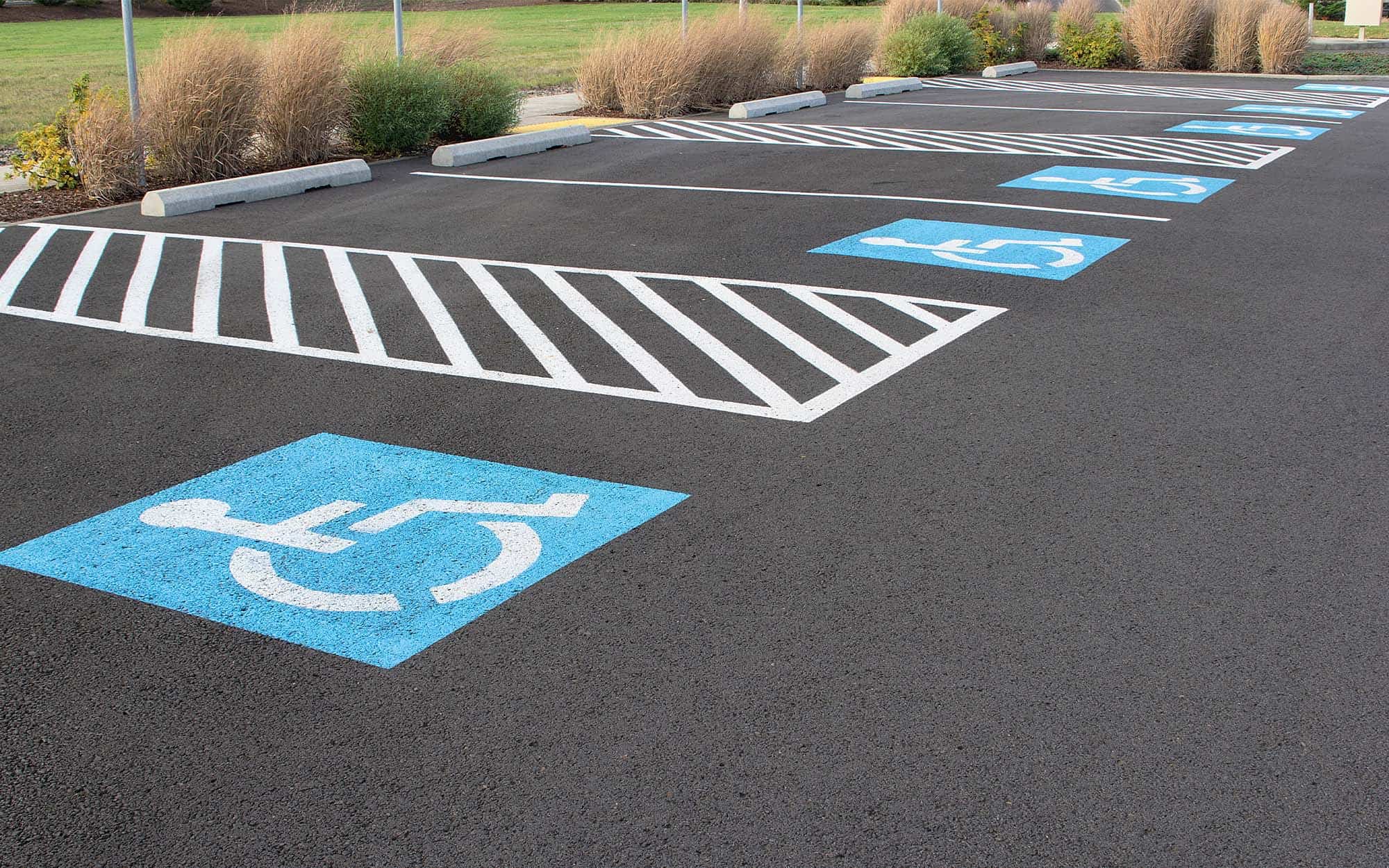
Signage is a vital part of ADA compliance. It provides clear, visible guidance to drivers and ensures that accessible parking spaces are recognized and respected.
- All accessible spaces require a sign with the International Symbol of Accessibility
- Signs must be at least 5 feet off the ground
- Van spaces need an added “Van Accessible” sign
These signs must remain legible and unobstructed at all times, even during snow or heavy traffic.
Surface and Slope
Maintaining a level and properly graded surface is essential to keeping parking areas accessible, especially for individuals using mobility aids.
- Surfaces must be paved and slip-resistant
- Slope cannot exceed 1:48 in any direction
Failing to maintain proper slope can create dangerous conditions, especially for wheelchair users or people using walkers or canes.
Maintenance
Businesses must ensure ongoing ADA compliance through regular maintenance:
- Maintain striping, signage, and surfaces year-round
- Clear snow, ice, and debris promptly
- Repaint faded lines before they become unclear
Proper upkeep helps avoid sudden violations and ensures customer and visitor safety.
Stay compliant and confident with ADA-ready parking lots. Discover how our industry-specific ADA solutions can provide layout planning, resurfacing, and signage for your parking lot. Contact Us Today
How Proper Paving Ensures ADA Compliance
Resurfacing can correct slope issues that develop from settling, damage, or poor installation. Smoother surfaces also improve wheelchair accessibility and reduce slip risks.
Potholes, cracks, and spalling can render accessible paths non-compliant. Prompt repair is essential to meet maintenance standards and ensure long-term access.
Striping for Visibility
Faded lines cause confusion and may result in misuse of designated spots. High-durability striping helps guide drivers and ensures ADA spaces are properly used.
Frequently Asked Questions About ADA Parking Lot Requirements
How do I know if my parking lot meets ADA requirements?
You’ll need to assess signage, striping, slope, surface condition, and space count. A professional inspection is the safest way to ensure full compliance.
What are the penalties for non-compliance?
Failure to comply may lead to federal fines up to $75,000 for a first offense and up to $150,000 for subsequent violations—not to mention lawsuits.
Who enforces ADA regulations in Missouri or Kansas?
The Department of Justice enforces ADA law federally, but state and local building codes also apply.
How much does it cost to make a property ADA-compliant?
Costs vary based on your parking lot’s size and current condition. Striping alone may be affordable, but resurfacing or signage replacement can increase costs.
Can paving companies help with ADA compliance?
Yes. Many paving contractors offer striping, resurfacing, signage, and layout planning designed specifically to meet ADA standards.
Let Phillips Paving Help You Get ADA Right
ADA compliance is about building safer, more welcoming spaces for everyone. Whether you manage a retail center, a school, or a healthcare clinic, our team helps bring your lot up to code with expert paving, striping, and signage solutions. Contact us today to discover how we keep commercial and residential pavement safe.