
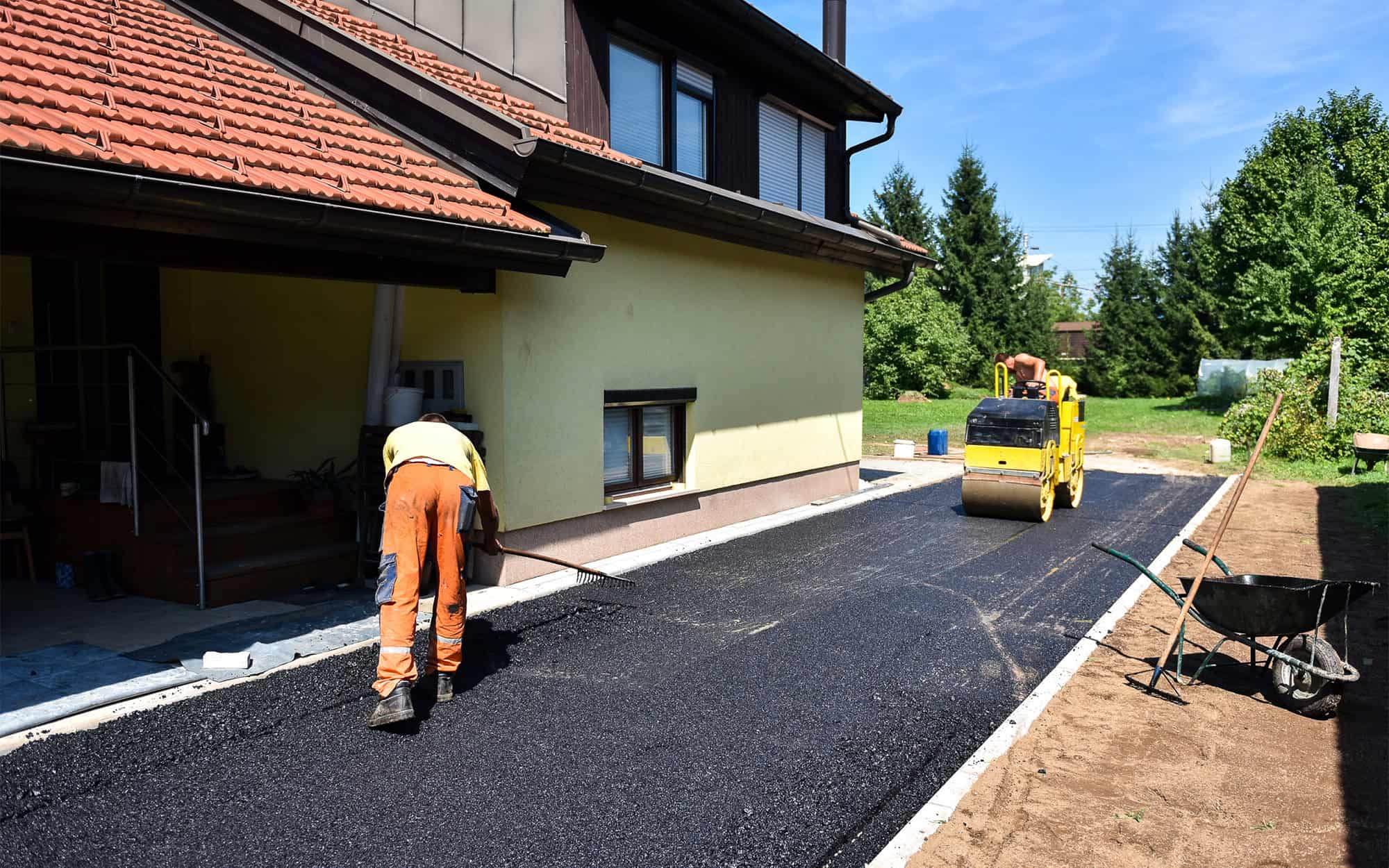
This guide will walk you through what to expect, what deserves attention, and how to protect your asphalt driveway from costly long-term issues.
Why Spring Is the Most Important Season for Your Asphalt Driveway
Spring is the most important inspection season for your asphalt driveway. The damage caused by winter does not always reveal itself immediately. As temperatures rise and moisture evaporates, cracks widen and weak spots become more visible.
Kansas City’s climate plays a major role in how asphalt behaves. The region’s clay-heavy soil expands when wet and contracts when dry. That constant ground movement places stress on your asphalt driveway, particularly if water has penetrated the base during winter. Spring gives homeowners a clear window to assess the full impact.
Addressing minor concerns early helps extend the lifespan of your asphalt driveway. Waiting until summer heat or heavy rains worsen the problem often results in more extensive repairs.
A Simple Post-Winter Asphalt Driveway Inspection Checklist
Before assuming the worst, take time to perform a slow, careful walk-through of your driveway. You do not need special tools, just a close eye and a few minutes of focused observation.
Surface Fading and Minor Oxidation
It is normal for an asphalt driveway to fade slightly over time. UV exposure and winter conditions can dull the rich black color, leaving the surface grayish or lighter in tone. This change is primarily cosmetic and does not necessarily signal structural damage. However, oxidation does weaken asphalt over the long term. If fading is accompanied by brittleness or small cracks, it may be time to consider preventive maintenance.
Hairline Cracks
Thin, narrow cracks are common after winter. These typically form when minor surface stress occurs during freeze-thaw cycles. A small cracked driveway section with hairline fractures may not require immediate professional repair. Still, homeowners should not ignore these early signs. Sealing or addressing cracks early can help fix driveway cracks before water infiltration causes larger problems.
Wider Cracks and Alligator Patterns
When cracks exceed a quarter inch in width or form interconnected “alligator” patterns, the issue is more serious. This type of damage often indicates base layer weakness beneath the asphalt driveway. Alligator cracking rarely resolves with simple patching. It often requires targeted asphalt driveway repair or structural correction to prevent further spreading.
Potholes and Soft Spots
Potholes develop when water seeps beneath the surface and erodes the base material. If you notice depressions, crumbling sections, or spongy areas underfoot, these are red flags. A cracked driveway that includes potholes should be evaluated promptly. Delaying repair increases the risk of expanding damage and higher costs.
Edge Breakdown and Drainage Issues
Driveway edges are particularly vulnerable to winter damage. Snowplows, shovels, and tire pressure can cause crumbling along unsupported sides. In addition, improper drainage may cause water to pool near edges, accelerating erosion. Inspect for standing water after rainfall. Persistent pooling can signal grading issues that require professional evaluation.
What’s Normal Wear vs. What’s a Red Flag?
Understanding what qualifies as normal wear can help homeowners avoid unnecessary worry while still acting quickly when needed.
Typically Normal Wear:
- Minor surface fading
- Isolated hairline cracks
- Small areas of surface roughness
- Light edge chipping
Potential Red Flags:
- Cracks wider than ¼ inch
- Multiple cracks forming web-like patterns
- Repeated pothole formation
- Water pooling after light rain
- Sections of a cracked driveway that feel unstable
If you are unsure whether damage is serious, consider how quickly it has developed. Rapid deterioration usually signals a deeper structural issue. In these cases, asphalt driveway repair becomes more urgent than cosmetic sealing.
Ignoring red flags can eventually lead to larger interventions such as driveway resurfacing. Catching problems early significantly reduces overall repair costs.
If your spring inspection reveals damage beyond minor surface wear, exploring professional residential asphalt services can provide clarity and prevent larger issues down the road. Learn how Phillips Paving ensures your asphalt driveway receives the right level of care.
Why Winter Damages Asphalt Driveways So Quickly in Kansas City
Kansas City winters are unpredictable. Sudden temperature swings create the perfect conditions for asphalt expansion and contraction. Water seeps into small surface openings during warmer periods, then freezes overnight, expanding and pushing the pavement apart.
Additionally, de-icing salts accelerate surface deterioration. While they improve safety during icy conditions, they can dry out asphalt binders and contribute to surface cracking over time.
Snowplows and heavy winter traffic also strain residential surfaces. Even a well-installed asphalt driveway can experience stress under repeated scraping and pressure. Combined with shifting clay soil beneath, winter creates a perfect storm for damage.
Understanding these local factors helps homeowners recognize why spring inspection and maintenance are so important.
Can You Repair an Asphalt Driveway Yourself?
Many Kansas City homeowners wonder whether they can repair an asphalt driveway without professional help. In some cases, small issues can be addressed with DIY solutions.
DIY Crack Filling
For narrow cracks, store-bought crack fillers can provide temporary protection. These products help seal small openings and reduce water infiltration. Proper surface cleaning and dry conditions are essential for success. However, crack filling does not address base damage. If cracks reappear quickly, professional asphalt driveway repair may be necessary.
Patching Small Potholes
Small potholes can sometimes be patched using cold-mix asphalt products. When applied correctly, these patches can stabilize the area for a period of time. That said, recurring potholes usually indicate base failure. In such cases, attempting to repair an asphalt driveway without correcting underlying issues may only provide short-term relief.
When Professional Help Is the Smarter Choice
Widespread cracking, drainage problems, or significant structural deterioration require more than surface-level fixes. Professional crews have equipment and expertise to assess sub-base conditions and apply durable repairs. Investing in expert asphalt driveway repair ensures long-term stability and prevents repeat failures.
The Cost of Ignoring Early Asphalt Damage
Small cracks rarely stay small. Water infiltration weakens the base layer, and repeated freeze-thaw cycles expand openings further. Over time, surface cracks evolve into potholes and unstable sections.
As damage spreads, repair complexity increases. What might have required minor sealing in spring can evolve into full driveway resurfacing within a few years if neglected.
Maintaining your asphalt driveway each spring reduces the risk of expensive reconstruction. Timely repairs preserve both curb appeal and property value, helping homeowners avoid unexpected costs.
Protect Your Asphalt Driveway This Spring
Phillips Paving understands the unique challenges Kansas City homeowners face each winter. From minor asphalt driveway repair to larger restoration projects, our team provides solutions designed to protect residential surfaces and fit homeowner budgets.
If your spring inspection raises concerns or you simply want expert guidance, reach out to Phillips Paving today. Addressing issues early ensures your asphalt driveway remains strong, safe, and visually appealing for years to come.
What Our Clients Say

Sooz C.
Ramon A.
Viper389890 D.
Mark T.
Gary T.
BRIANA M.
RICHARD M.
HOA BOARD
IRENA B.
HOME OWNER
© 2026 Phillips Paving. All rights reserved. | Privacy Policy